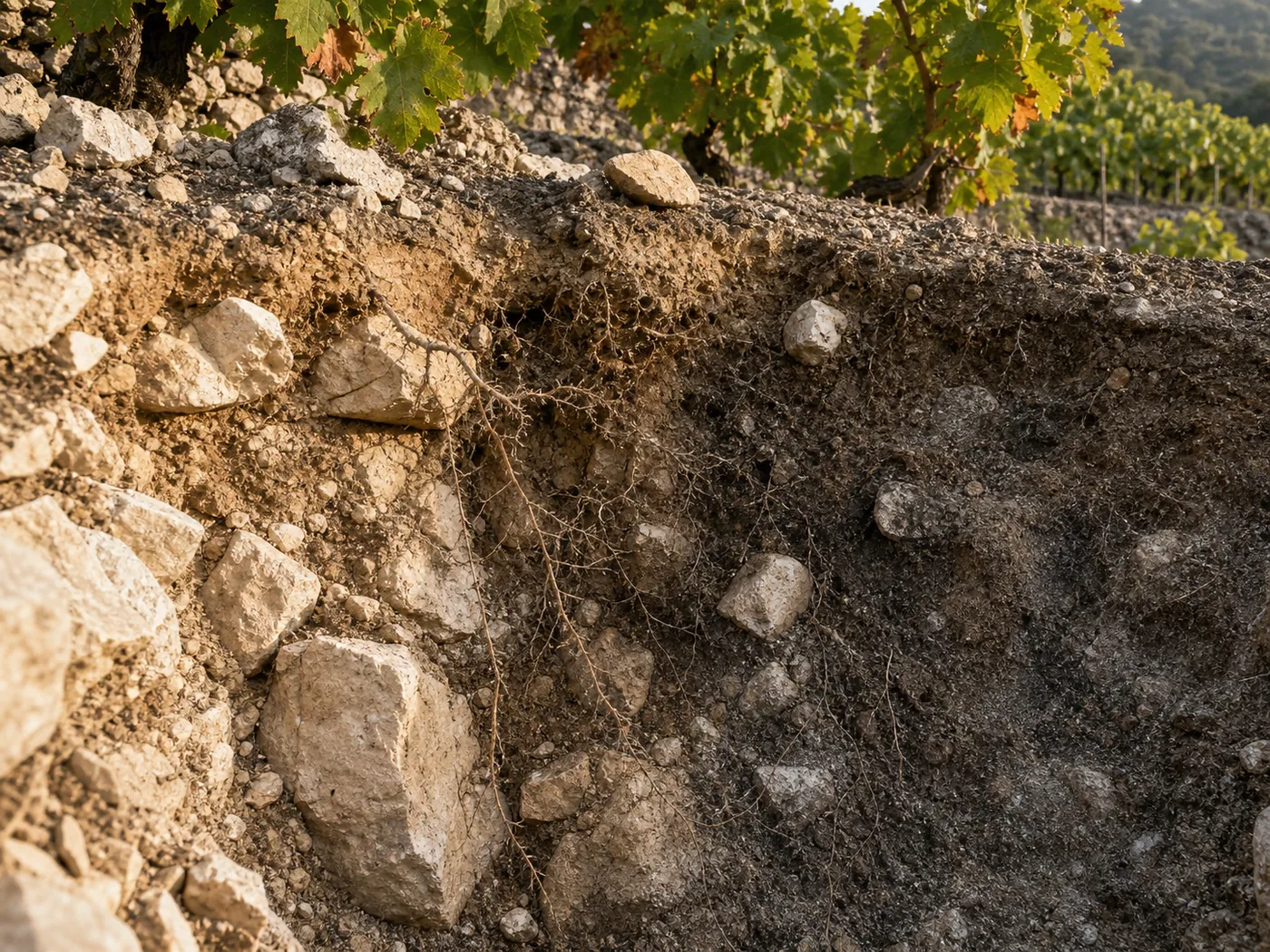
Vineyard soil
Texture, depth, structure and organic matter influence drainage, water retention and root development. These properties require parcel-level analysis.
 Mount Athos Wines
 Wines ofMount Athos
Search the archive
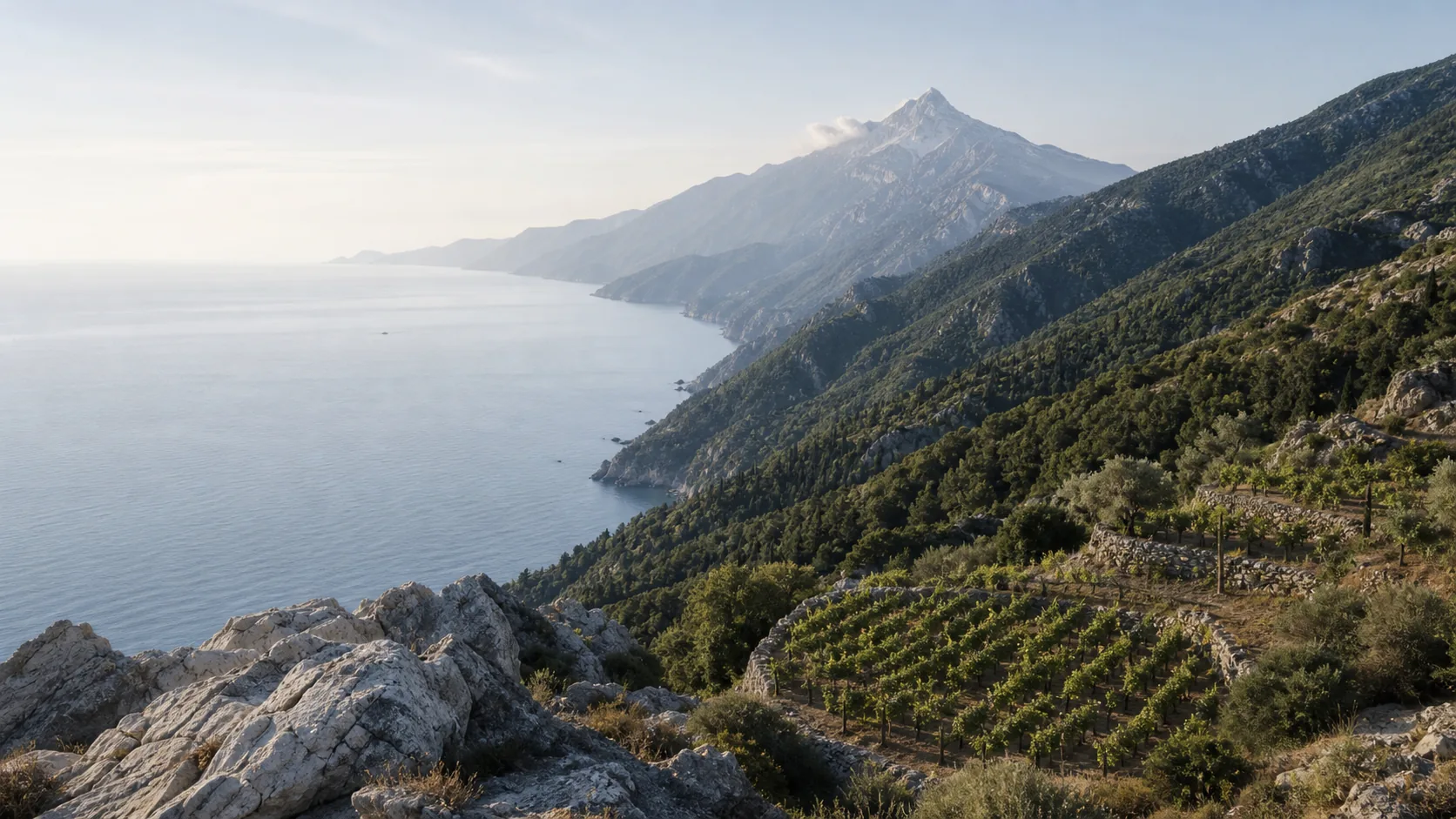
Living systems
Forest, sea, cultivated land and varied relief interact within a protected cultural landscape.
Begin the story ↓Grapes / Ecosystem
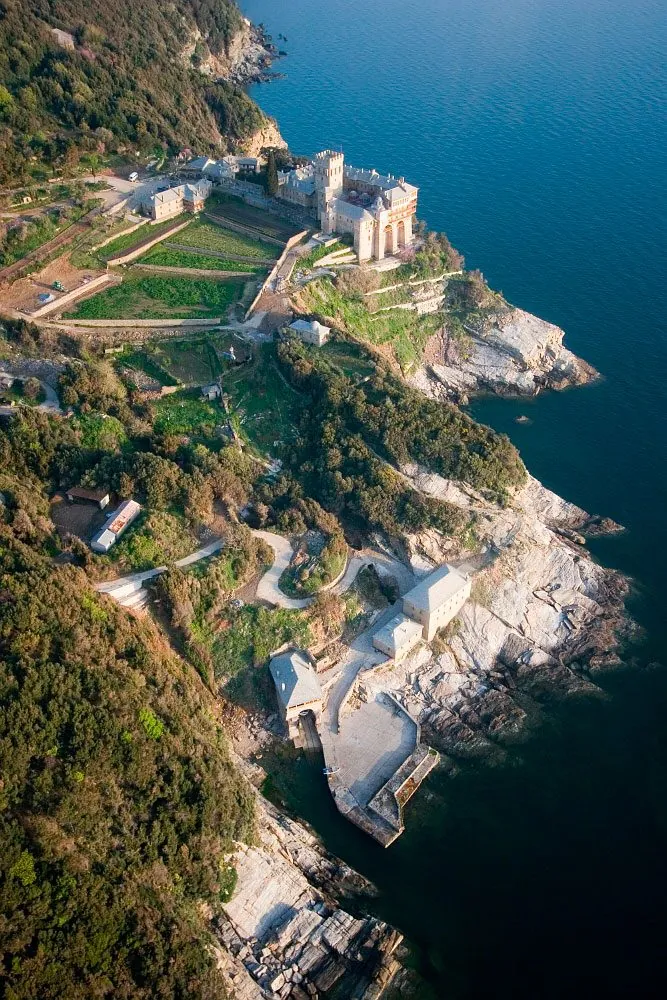
Forest, sea, slope and cultivated land occur in close proximity. Their influence on a vineyard depends on its precise location, soil profile, grape variety, management and growing season.
1. Geomorphology
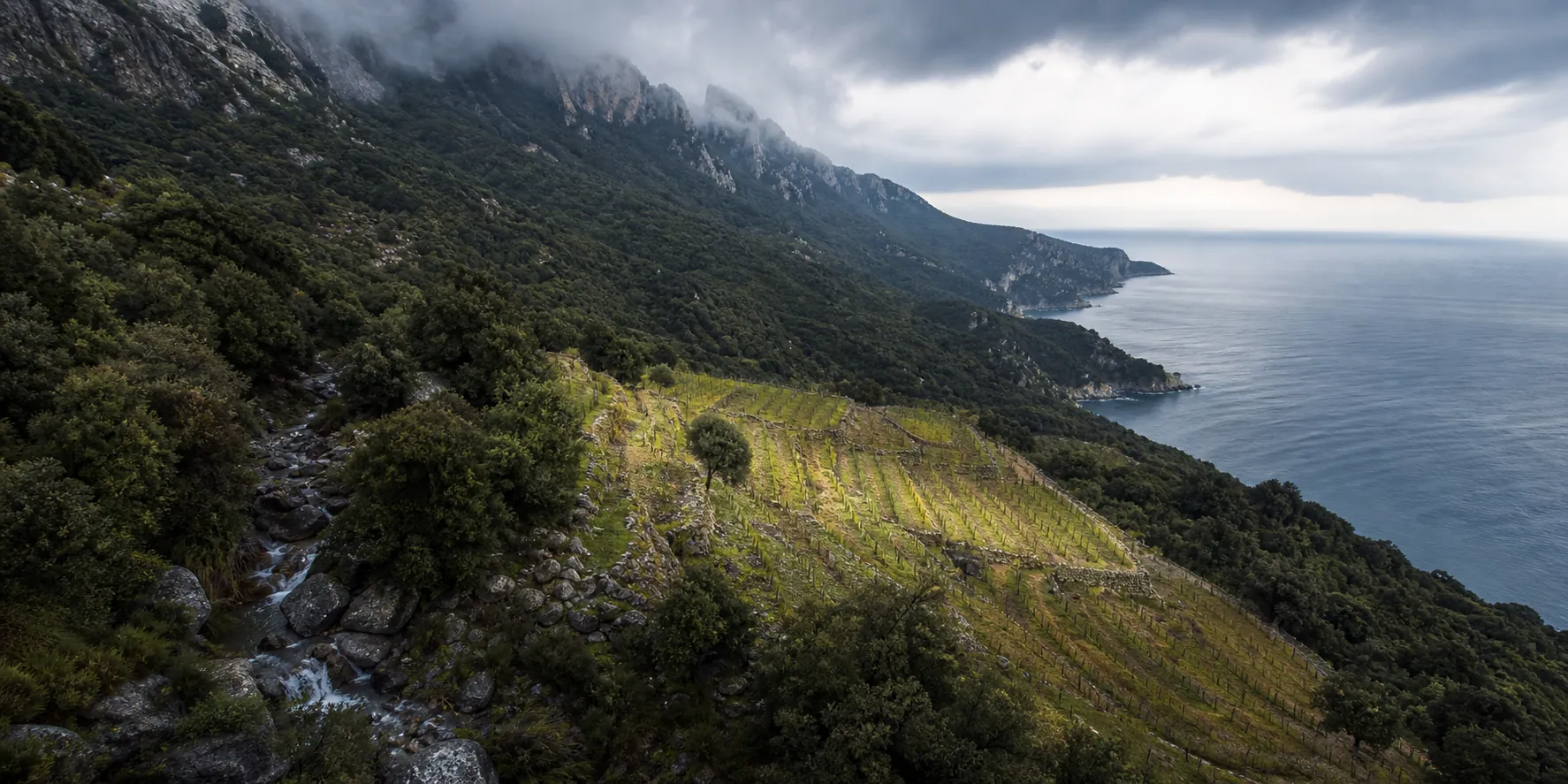
The Athos peninsula is long and narrow, with steep coastal slopes, ravines and strongly folded relief. These features influence runoff and drainage, but water availability at vine level also depends on soil depth, texture, vegetation, rainfall and vineyard management.
2. Soil and geology
The product specification describes vineyard soils as medium-textured, commonly sandy-clay to clay-sandy, with local sandy-silty occurrences. The peninsula’s underlying geology is more diverse and includes metamorphic, crystalline and igneous rocks.
Texture, depth, structure and organic matter influence drainage, water retention and root development. These properties require parcel-level analysis.
Gneiss, schist, limestone, marble, granite, granodiorite and ophiolite occur in the wider geological setting. Their presence does not by itself predict a wine’s aroma or taste.
3. Viticultural implications
Within the official 10–400 m PGI vineyard range, altitude, aspect and distance from the sea interact over short distances. Northeast-facing slopes can be cooler, while southwest-facing slopes generally receive more sunlight. Air movement may improve ventilation, but ripening and disease pressure must be assessed for each vineyard and season.
These sites may receive less afternoon radiation, but temperature and ripening must be verified for the individual vineyard.
Potentially cooler exposureThese sites generally receive stronger afternoon radiation; the effect depends on slope, canopy and seasonal conditions.
Higher solar exposureAir movement can help reduce canopy humidity, although fungal-disease pressure also depends on rainfall, canopy density and plant-protection practice.
Ventilation as one factorSelected authorised varieties
The current PGI specification authorises sixteen wine-grape varieties: seven for white wines and nine for red wines, with a defined list for rosé wines. The examples below are a selection, not a statement about planted area or dominance.
Red varieties
White varieties


