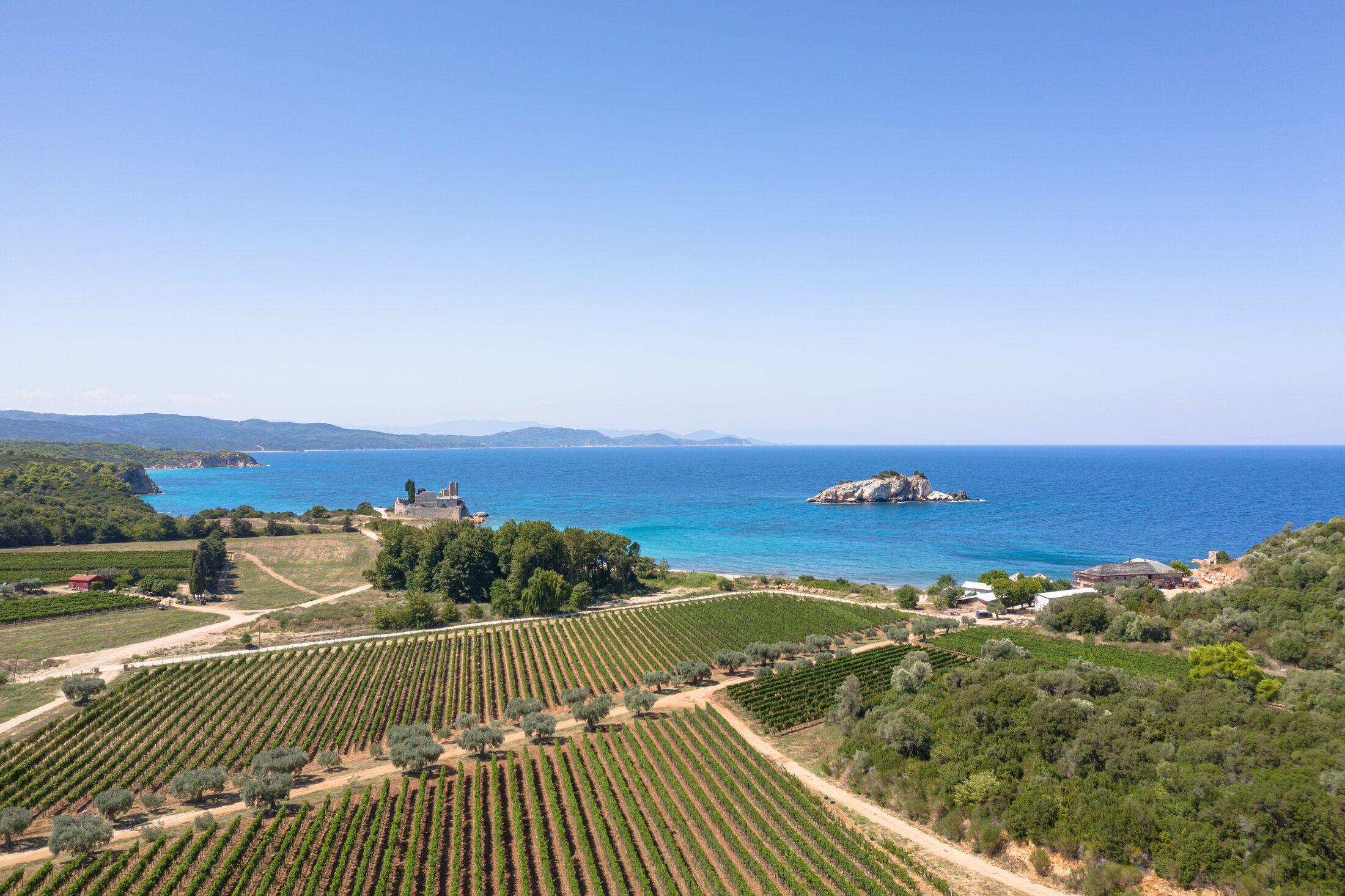
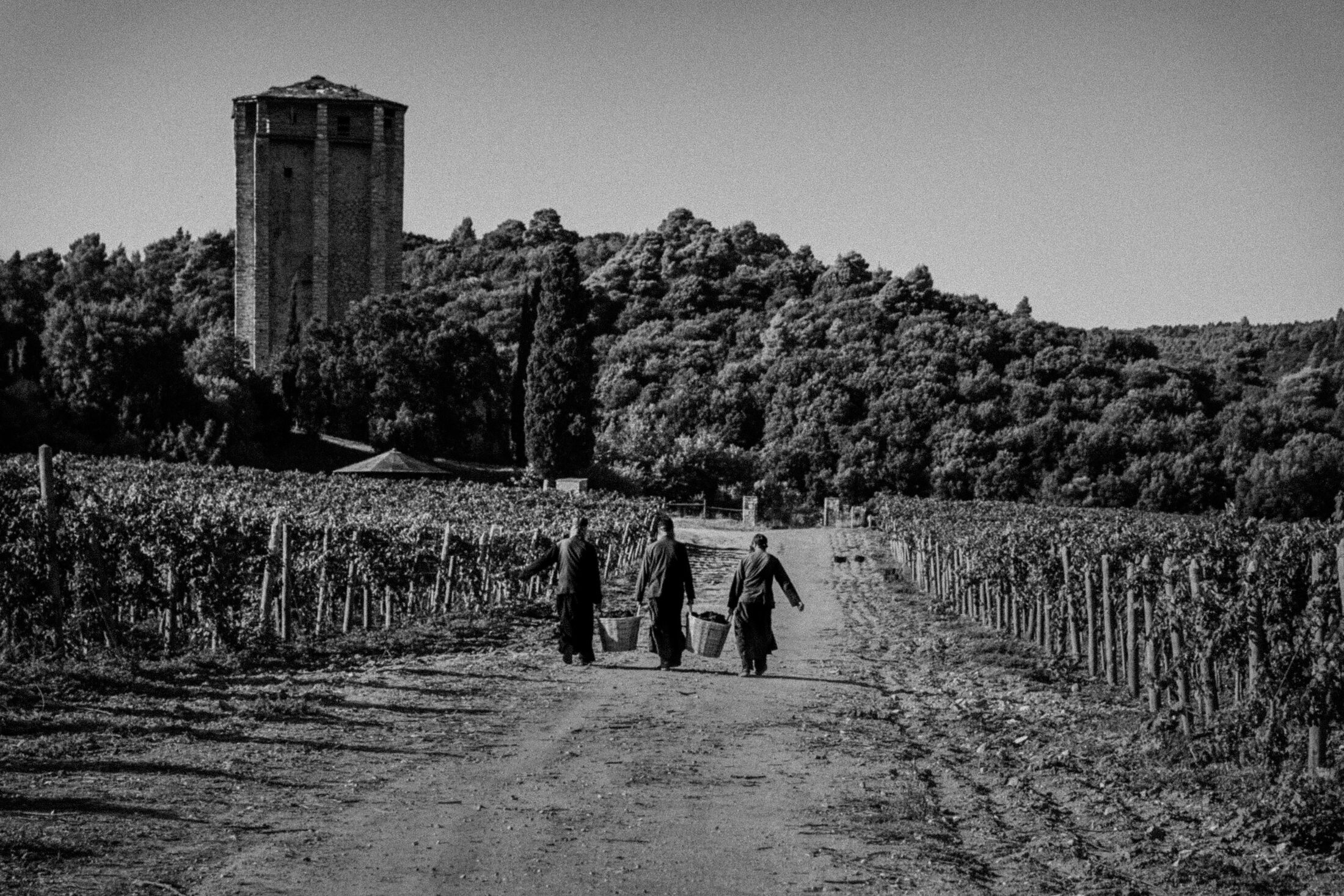
Across the PGI Mount Athos area, vineyards develop under the combined influence of relief, maritime exposure, local soils and documented viticultural practice.
Discover the viticultural heritage of the PGI Mount Athos area, encompassing the autonomous monastic territory and Ouranoupoli in northern Greece.
Historic monastic traditions meet contemporary, regulated wine production in a landscape shaped by spirituality, environmental care and cultural continuity.
Navigate through dedicated sections
Explore by Theme
Living terroir
A mountain shaped by sea and altitude
Explore how exposure, elevation and maritime winds create distinct growing conditions across the peninsula.
Altitude2,033 mPeak elevation10–400 mOfficial PGI vineyard range3 pointsExplorer locations01 / 03Lower vineyard bandLower-elevation vineyards are more directly exposed to maritime influence. Ripening behaviour nevertheless depends on aspect, soil, variety and seasonal conditions.02 / 03Middle vineyard bandMid-altitude vineyards can combine air movement with cooler night-time conditions; each site must be assessed individually.03 / 03Upper PGI slopesVineyards near the upper 400 m limit may experience cooler conditions, but altitude alone does not determine ripening or wine style.
Sea windN / NEPrevailing windsAegeanMaritime influence3 pointsExplorer locations01 / 03Sheltered western foldsLocal relief creates sheltered pockets where maritime influence is softened by the shape of the land.02 / 03Open central slopesNorth and northeast winds contribute to vineyard ventilation and can moderate summer conditions.03 / 03Exposed upper slopesHigher, more exposed parcels receive stronger airflow; the outcome depends on aspect and local topography.
SoilMixed geologyLocal variationDrainageSite-specific structureAnalysisProducer evidence01 / 03Western sitesSoil texture and parent material vary over short distances and should be described from site analysis.02 / 03Central sitesDrainage, depth and mineral availability interact with slope and vineyard management.03 / 03Upper sitesShallower or stonier profiles can restrict vigour, but each claim requires parcel-level evidence.
VineyardsDefined PGI10–400 mSelected sitesVaried exposuresIndividual practiceProducer by producer01 / 03Western vineyard sitesSelected coastal and lower-slope vineyards combine Aegean influence with individual cultivation choices.02 / 03Central vineyard sitesMid-slope parcels vary in aspect, airflow and soil, supporting both Greek and international varieties.03 / 03Upper vineyard sitesHigher parcels within the PGI limit can offer cooler nights and slower ripening, depending on exposure.
Season in the vineyards
A year measured by the vine
Monastic time and natural time meet in a patient cycle of pruning, growth, harvest and rest.
Winter · Rest & pruning
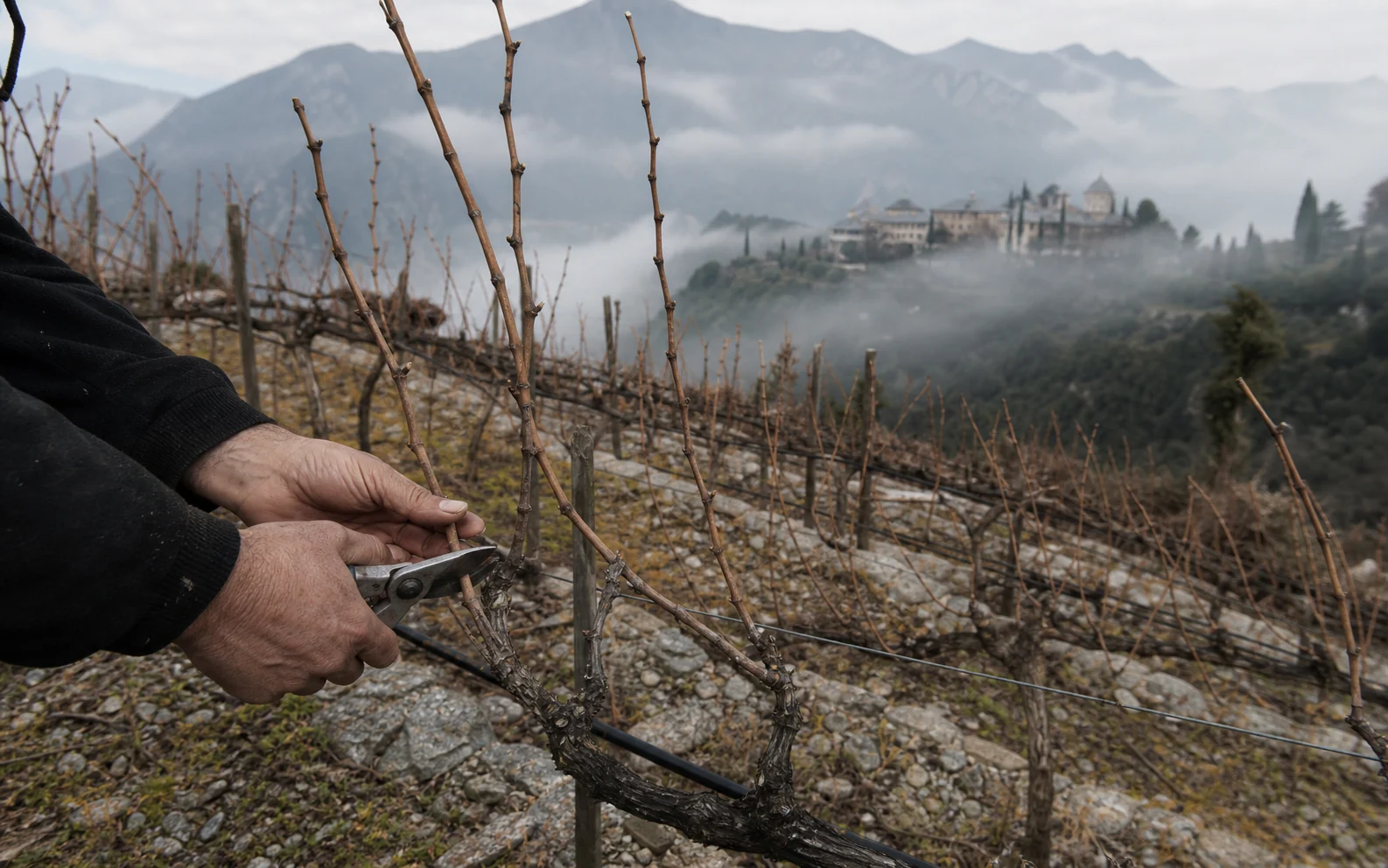
Dormancy and precise pruning
In winter, the vine is carefully pruned. Each cut prepares the architecture of the coming vintage.
The vine has long been part of the peninsula’s daily rhythm—cultivated for the table, for hospitality and for the shared life of the monastic communities.
“What we hold, we tend with patience, so that it may be passed on.”
Encountering Athonite Wine Culture Beyond the Peninsula
Mount Athos is a protected monastic landscape. These new perspectives explain how its wine and food culture can still reach the wider public.
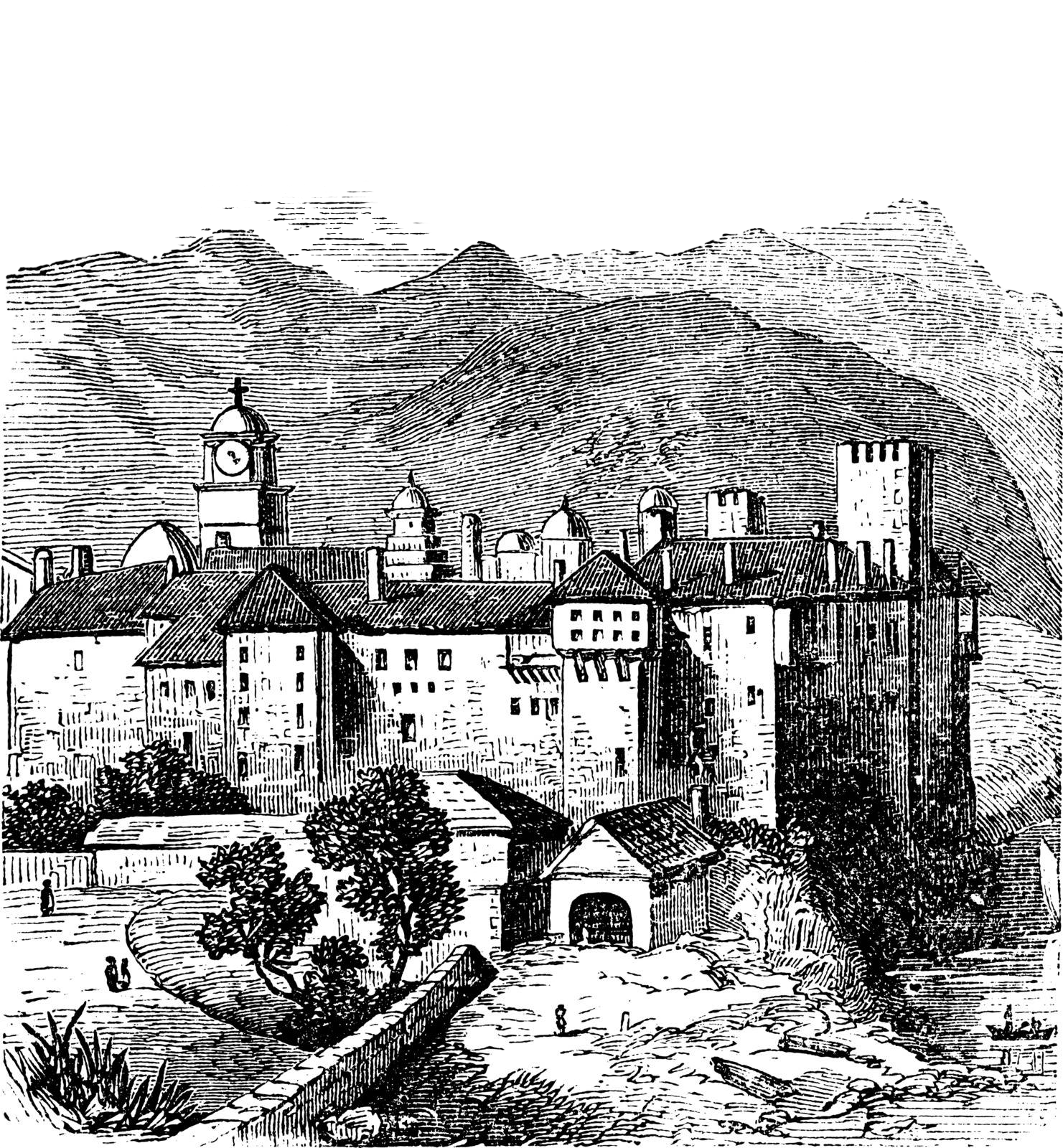
The peninsula is approached by sea
01
The protected threshold
The Avaton, Access and Wines Beyond the Monastic Territory
Entry to the Autonomous Monastic State is controlled and requires a diamonitirion permit; the Avaton excludes women from entering the monastic territory. PGI Mount Athos wines can nevertheless be encountered beyond the peninsula through authorised distribution, cultural events and educational programmes.
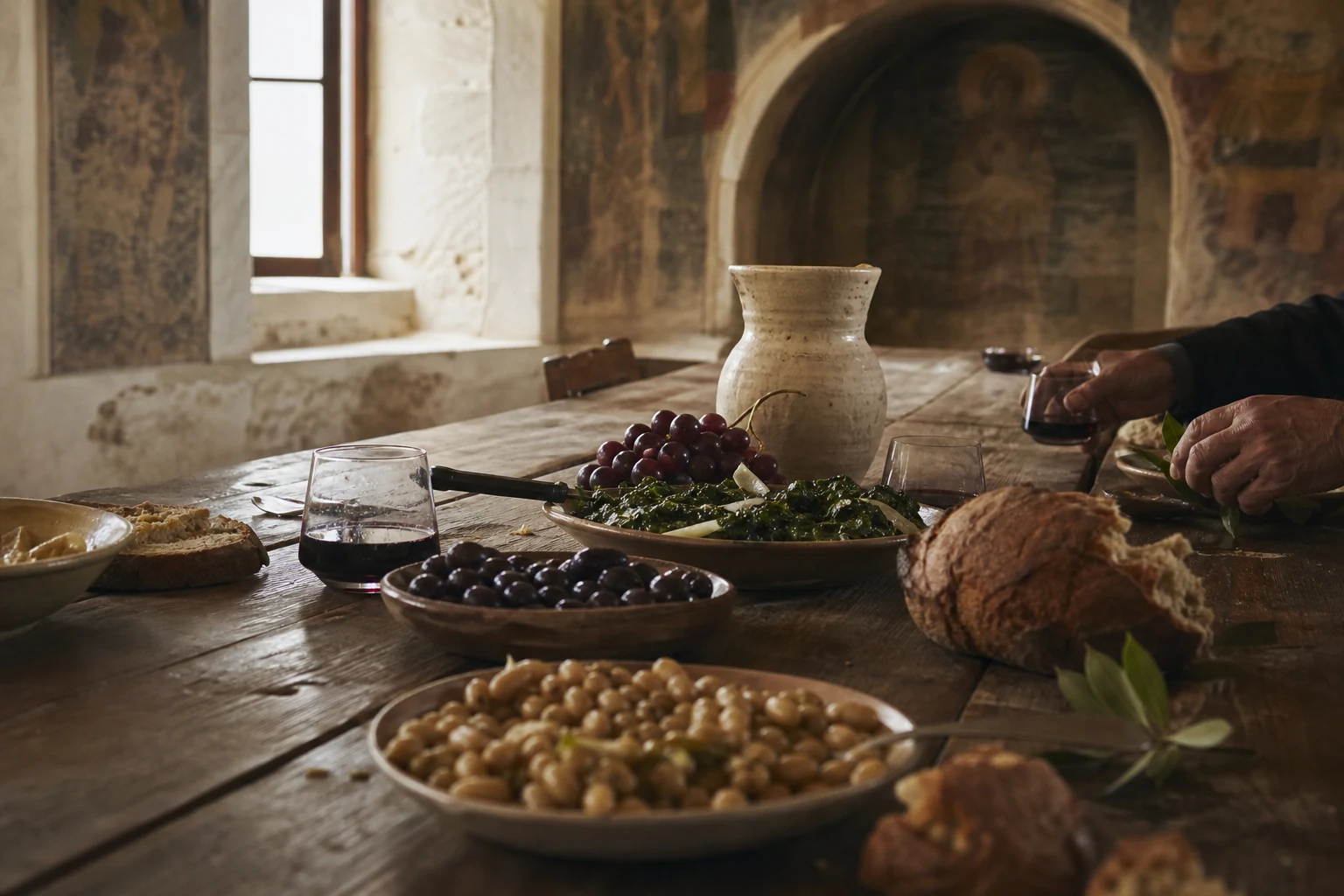
Because access to the monastic territory is restricted, its food-and-wine culture is presented to the wider public through publications, tastings and cultural or educational programmes. These encounters place wine within its historical, geographical and religious context without confusing table wine with wine intended for liturgical use.


 01 / 04