Terroir
The interaction of climate, soil, topography, grape variety and human practice within a particular place; it informs, but does not alone determine, a wine’s characteristics.
 Mount Athos Wines
 Wines ofMount Athos
Search the archive
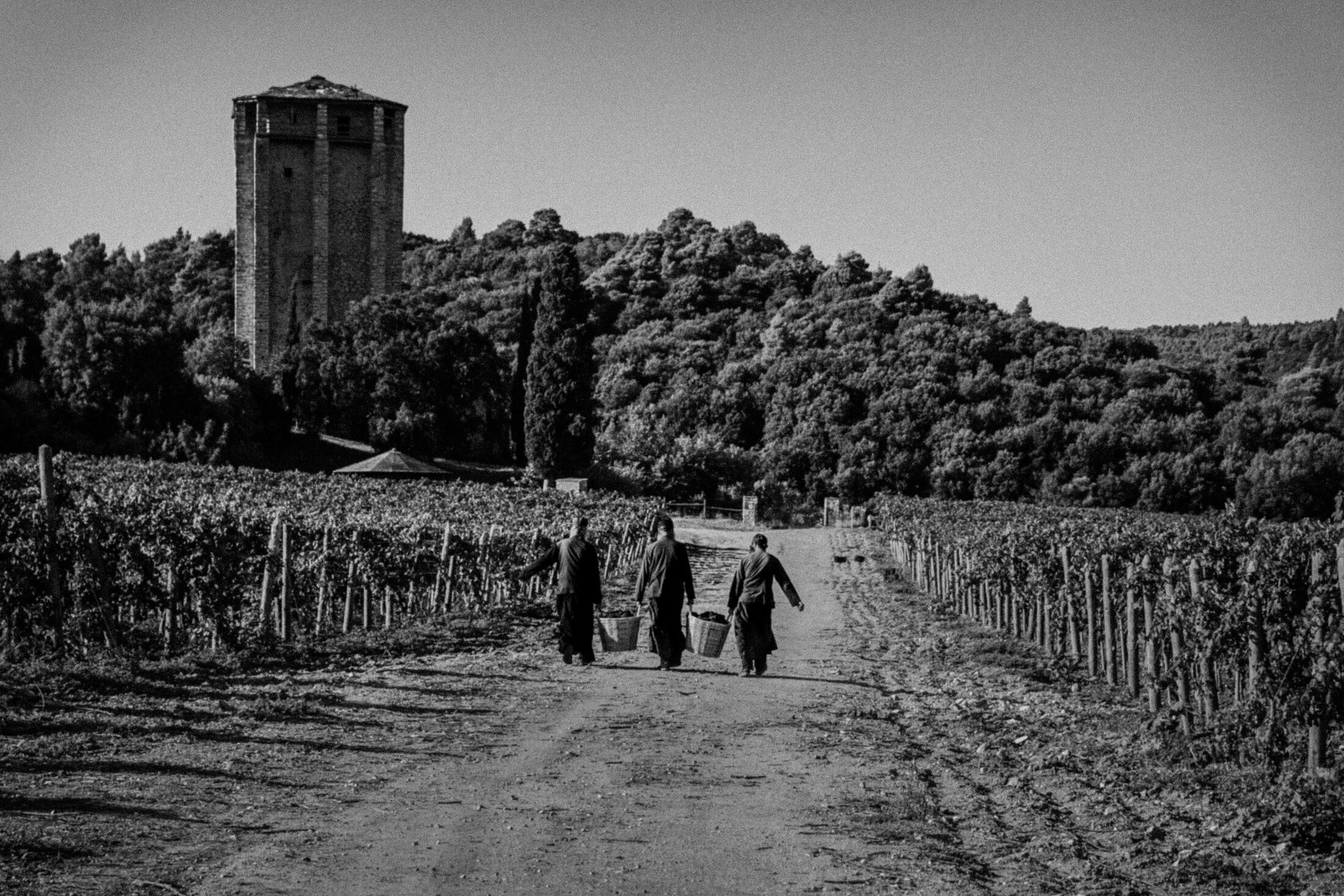
Words of the landscape
The language of the vineyard, the monastery and the protected geographical indication.
Begin the story ↓Glossary of key terms
This glossary is a practical reference to viticultural, monastic and geographical-indication terminology used throughout the site.
The terms bring together technical viticulture, the institutional and religious vocabulary of Mount Athos, and concepts used in landscape and environmental description.
Each definition is intended to clarify how the term is used in this project and to distinguish technical, legal and religious meanings where necessary.
37 terms
The interaction of climate, soil, topography, grape variety and human practice within a particular place; it informs, but does not alone determine, a wine’s characteristics.
Cultivation without routine irrigation, relying principally on rainfall and water stored in the soil; actual practice must be verified for each vineyard.
The juice obtained from crushed or pressed grapes before or during fermentation; depending on the process, it may be in contact with skins, seeds or stems.
Large traditional wooden vats used for crushing and maceration.
Traditional vats used for fermentation.
Pomace brandy distilled from grape skins after winemaking.
Wine made from grapes dried in the sun after harvest, concentrating sugars and other constituents before vinification.
Fortified wine is wine to which wine-derived alcohol has been added. It should not be treated as synonymous with every sweet wine or with every wine labelled vin doux.
The process of turning grapes into wine, covering fermentation, aging, and clarification.
Natural process where grape sugars are converted into alcohol by yeasts
Manual picking of grapes, preserving quality and ensuring careful selection
A sweet wine whose alcoholic strength has been increased by adding wine-derived alcohol; it is a distinct production category from naturally sweet sun-dried wine.
Wine selected or prepared for use in the Orthodox Divine Liturgy according to ecclesiastical requirements; distinct from table wine.
Relating to sensory assessment — appearance, aroma, taste and texture.
A traditional free-standing bush-vine training system, without wires or trellis.
The onset of ripening, when grapes change colour and begin to soften.
The sediment of spent yeast; “sur lie” means ageing wine on its lees for texture and depth.
Conversion of sharp malic acid into softer lactic acid, rounding acidity.
Leaving juice in contact with the skins to draw out colour, tannin and aroma.
Sulphur compounds protecting wine from oxidation; labels declare “contains sulfites” above a threshold.
The year in which the grapes were harvested. Athonite institutions, worship and communal life are described by a specialised vocabulary. The terms below distinguish constitutional structures, forms of monastic organisation and liturgical practice from the technical vocabulary of viticulture.
The first surviving Athonite Typikon, issued in 972 by Emperor John I Tzimiskes and signed by Athonite representatives; it regulated the organisation of monastic life.
Monastic way of life where monks live communally, sharing work, meals, and prayer
The institutional rule excluding women from entry into the territory of the Autonomous Monastic State of Mount Athos.
An EU geographical-indication category in which a wine's registered name and reputation, quality or other characteristic are attributable to its geographical origin, under an approved product specification.
The first surviving Typikon of Mount Athos, written on goatskin in 972; its fifteenth provision addressed the sale of wine beyond the boundary at Zygos.
A dependency or estate belonging to a monastery, which may be situated away from the parent monastery.
An organised monastic dependency made up of smaller brotherhoods or dwellings and attached to one of the twenty monasteries.
The permit required for an authorised visit to the Autonomous Monastic State of Mount Athos.
The central representative body of Mount Athos, composed of one representative from each of the twenty monasteries.
The Church’s fasting discipline; on many fast days wine and oil are permitted, on stricter days abstained.
The festal celebration of a monastery’s patron saint.
The monastery refectory, where the community shares its meals.
The diversity of living organisms, including variation within species, between species and among ecosystems; its condition must be assessed with ecological evidence.
The EU network of protected sites established for the conservation of specified habitats and species. Site designation does not itself certify the farming practice of an individual vineyard.
An interpretive, non-regulatory expression for the relationship between place, cultivation and Athonite religious culture; it is not an official wine classification.
Cultivation on constructed or retained level steps on sloping ground. Terraces can reduce slope length and influence erosion and water movement, but their performance depends on design and maintenance.
Try a broader word or reset the active filters.
Three connected vocabularies
These terms describe vineyard management and winemaking processes. Historical continuity is documented where sources allow, while present-day methods vary by producer and production context.
Mount Athos contains forest, coastal, mountain and cultivated habitats within a protected cultural landscape. The terms below describe ecological designations and landscape concepts without assuming that every vineyard follows the same management system.


