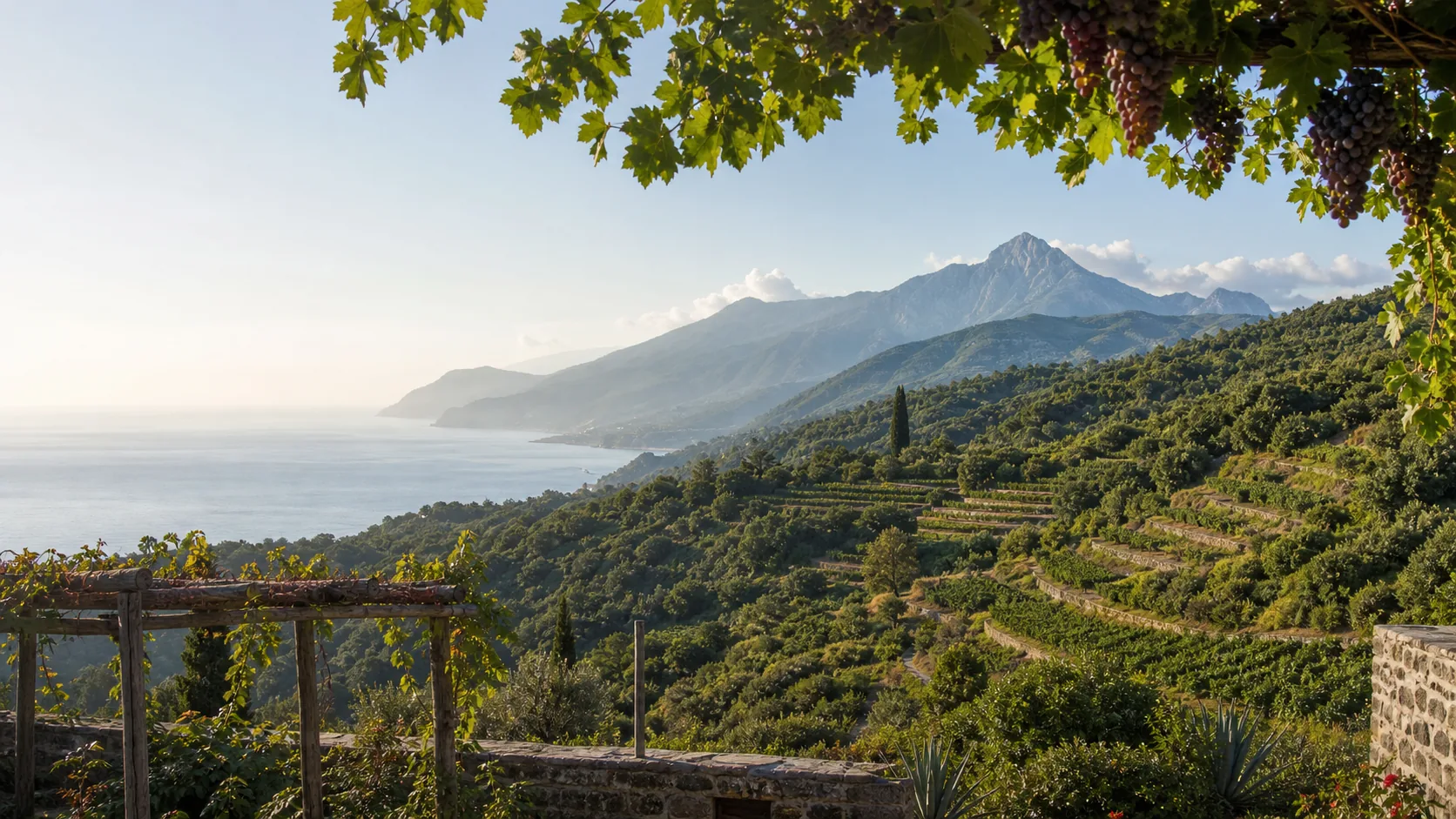
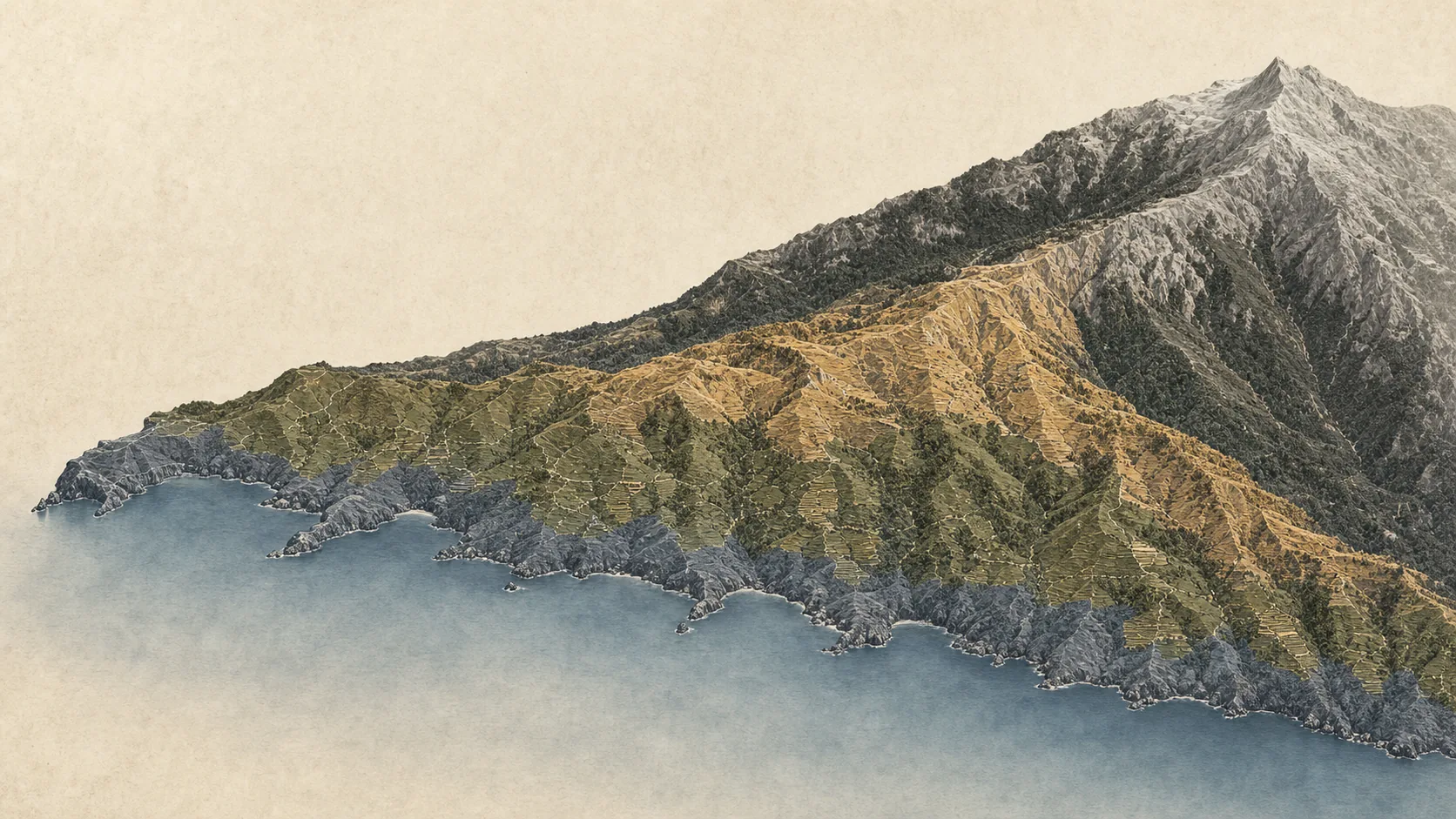
A varied viticultural setting within 10–400 metres.
The official PGI zone extends from 10 to 400 metres above sea level. Within that range, distance from the coast, aspect, relief, soil and management can create different growing conditions; the four bands below are interpretive aids, not legally defined subzones.
10–400 mofficial PGI vineyard elevation
200–300 mrepresentative mid-altitude vineyard band
2,033 msummit elevation of Mount Athos
470–850 mmannual rainfall, low to high zones
0110–100 m02100–200 m03200–300 m04300–400 m
Mount Athos2,033 m
Exploration bands within the official PGI zone—not regulatory subzones.
Explore by elevation
01
Sea-moderated
10–100 m
Maritime edge
Coastal vineyards may experience cooling air movement, higher humidity and moderated summer temperatures; the effect varies with exposure and site.
Breeze · humidity · thermal balance
The product specification authorises vineyards from 10 to 400 metres, while Mount Athos itself rises to 2,033 metres. A vineyard’s exposure and growing conditions must be assessed at site level rather than inferred from a representative altitude alone.
Climate profile
Maritime influence and altitudinal variation.
The Athonite climate belongs to a transitional Mediterranean zone, moving from maritime conditions at the coast to more continental, humid climates in the interior.
Summer31°C
Summers: Warm but moderated, with average highs of 31 °C in July–August.
Winter8°C
Winters: The PGI specification reports average daily temperatures of about 8 °C in January–February and average minimum temperatures above 0 °C.
Rainfall470–850 mm
Rainfall: 470 mm annually in low areas, rising to 850 mm in higher zones, concentrated from October to April.
WindsN/ NE
Winds: The PGI specification identifies north and northeast winds as predominant, with southerly winds more frequent in summer. Their vineyard effect depends on local exposure and canopy conditions.
These are regional averages reported in the PGI specification. They describe the production area but do not replace site-specific or vintage-specific meteorological data.
Geology & soils
Geological setting and vineyard soils.
Geologically, Mount Athos continues the Rhodope massif, marked by metamorphic and crystalline formations.
Metamorphic rocks
Gneiss, schist and marbles.
Igneous intrusions
Granite, granodiorite and ophiolites.
Vineyard soils
Medium-textured, commonly sandy-clay to clay-sandy, with local sandy-silty occurrences.
Soil texture and parent material influence water and nutrient availability, but sensory terms such as “minerality” cannot be assigned to a wine from geology alone.
Viticulture within a protected cultural landscape.
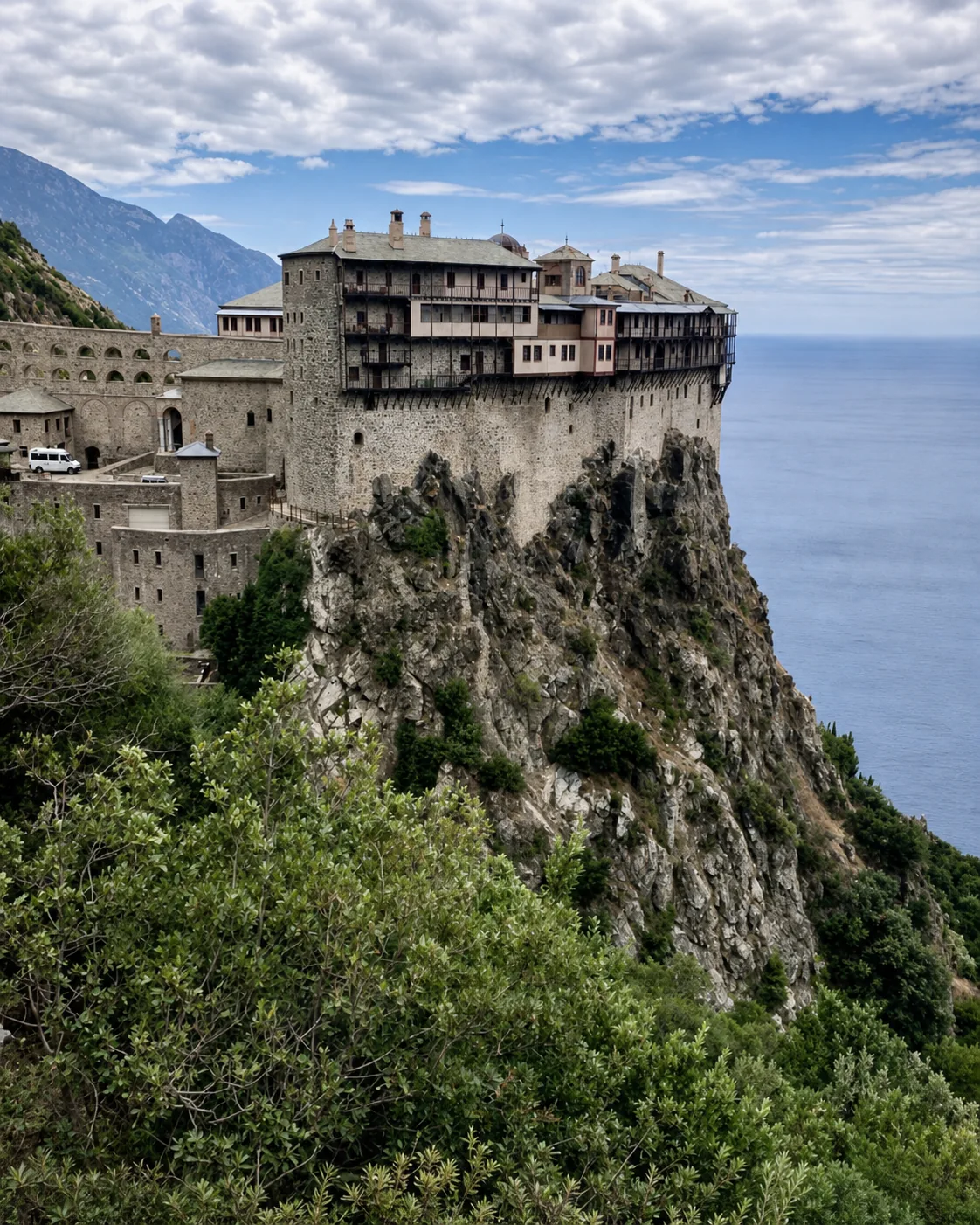
Vineyards exist within a wider cultural landscape of forests, cultivated clearings and monastic settlements. UNESCO recognises the long interaction between monastic life, traditional agriculture and forestry, while present-day vineyard practices and certifications remain producer-specific.