The twentieth century and beyond
Renewal is part
of continuity.
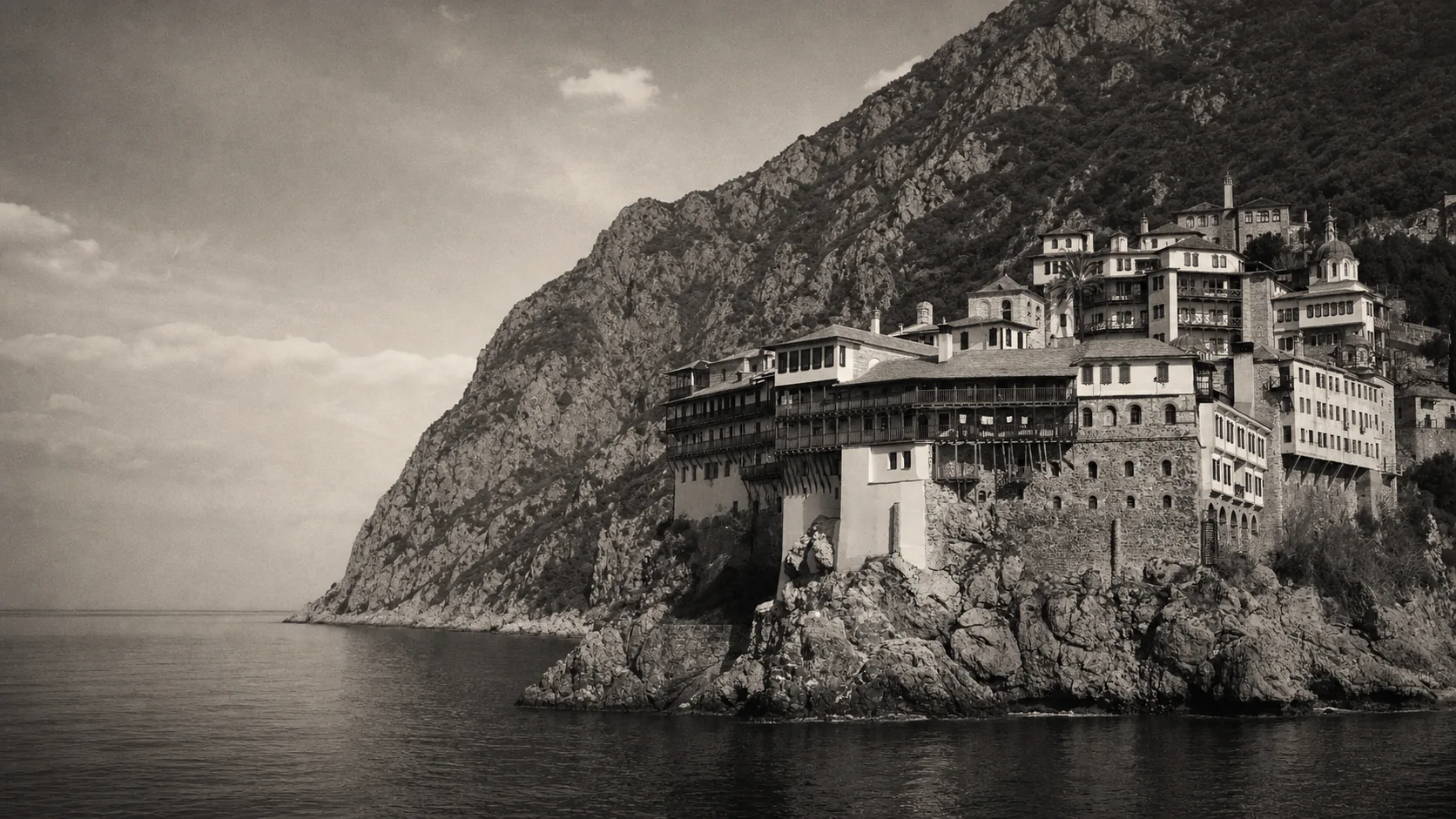
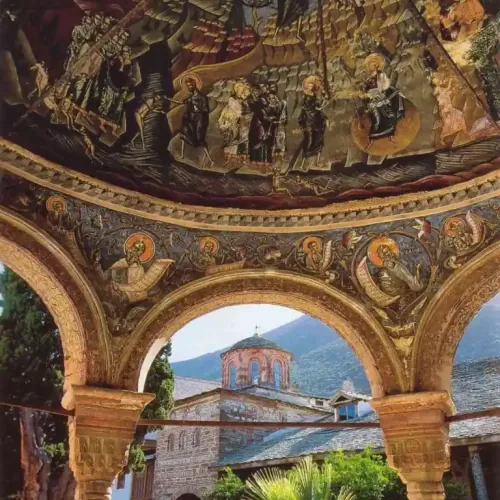
Mount Athos passed through the wars, political changes and material difficulties of the twentieth century while retaining its monastic institutions and collections. The preservation of buildings, manuscripts, icons and movable heritage has required continuing conservation rather than an assumption of uninterrupted physical survival.
After a period of demographic and material decline, the later twentieth century brought renewed monastic settlement and extensive restoration. In 1988, UNESCO inscribed Mount Athos on the World Heritage List for both its cultural and natural significance.
Now,
The Athonite polity is organised around twenty sovereign monasteries within its own constitutional terminology, together with sketes, cells and other dependencies. Entry is regulated and visitors require a diamonitirion. Population totals and the number of inhabited dependencies change over time and should not be treated as fixed historical constants.
Its significance lies in the continuity of a living monastic community, not in a landscape frozen in the past. Worship, scholarship, conservation, forestry and cultivation coexist within an institution that has repeatedly adapted to changing historical conditions.